03 August 2026
The PPWR is Almost Kicking in! Are you Ready?
Updated: 03 August 2026
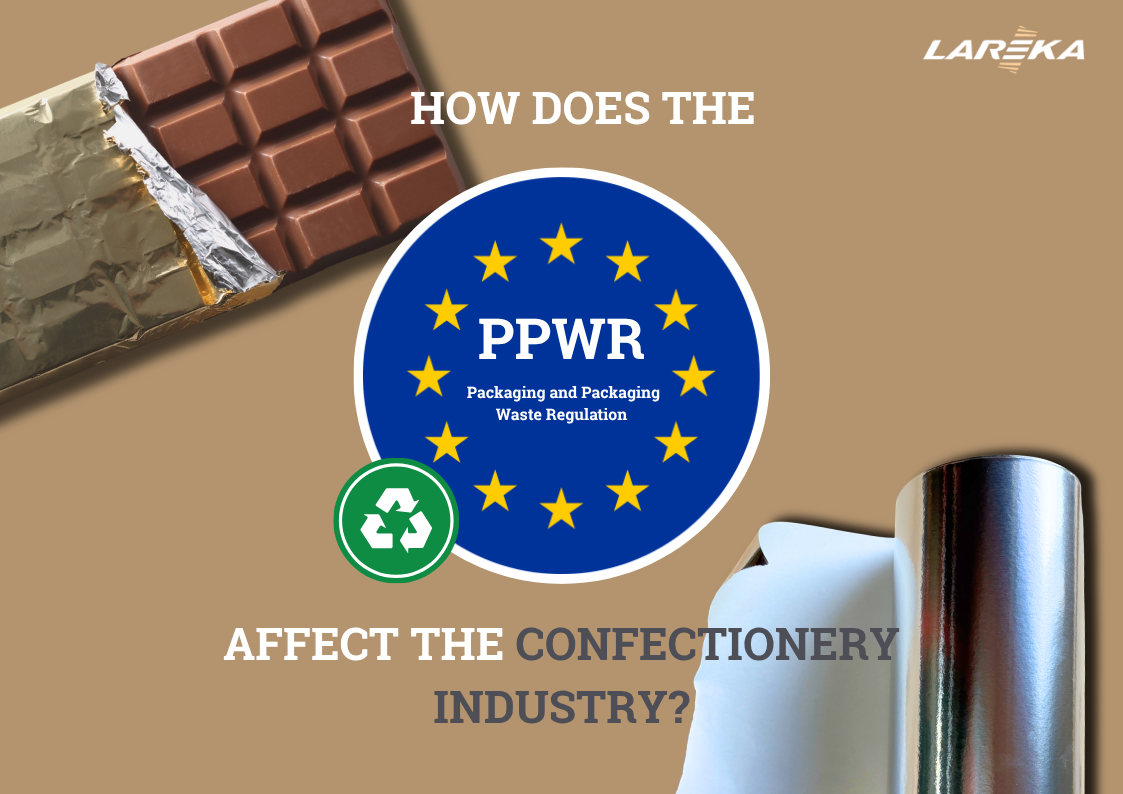
If you sell wrapped products in Europe you need to save this date on your calendar: 12th of August 2026.
That is the day the European Packaging and Packaging Waste Regulation (PPWR) kicks in. This regulation will affect how your packaging looks and how much it costs and whether it can be sold on the European market. It marks the switch for Europe to one set EU regulations for all packaging related matters throughout all industries.
In this article, we will focus on what implications the PPWR brings to the confectionery industry.
What is the PPWR?
The PPWR replaces the old 1994 packaging directive (Directive 94/62/EC). Unlike a directive, which is translated by each country into its own legislation so the rules different from one country to another, a regulation works directly and is the same everywhere in Europe. Thus, whether you are selling your products in the Netherlands, Italy or France, you will have to follow the same requirements.
The PPWR will control packaging standards at scale from what materials should be used for packaging to the dimensions and how the package gets recycled. For some companies this might be an easy and quick change but others might need to completely rethink their packaging styles and materials. Changing the packaging involves many steps that take much time: tooling, sourcing, testing, logistics.
What’s the biggest shift with the PPWR?
The biggest change that the PPWR is bringing is definitely the fact that all packages must be recyclable. This is because, although today many packages are theoretically recyclable, in reality they are not. In particular, multi-layer materials and mixed plastics are quite difficult to process and they will begin disappearing. Gold foil is a great example of this. Although we all love using gold foil on our packaging due to its premium and sophisticated look, it is actually a multi-layer material and thus, difficult to recycle.
Furthermore, there will be restrictions on certain chemicals such as PFAS that are used for making food-related packaging to resist grease, moisture and heat. The main issue with these chemicals is that they do not break down easily and therefore, they will be restricted.
Another big shift will be the introduction of consistent labelling. Whereas now labels can be quite confusing due to the use of different symbols and rules, the PPWR will urge manufacturers to show on their labels what the packaging is made of, how to dispose of it correctly and additional data via QR codes.
Last but not least, the PPWR urges manufacturers to avoid unnecessary extra layers on their packaging and do not leave any empty space to be filled with air cushions, foam fillers, and paper padding. Thus, oversized boxes cannot be stuffed with fillers to compensate.
How will the PPWR affect the confectionery industry?
Regarding the confectionery industry, the most important points to be remembered are:
- Use mono-materials where possible
- Switch to PFAS-free barriers
- Re-order and make disposal instructions more clear on the label
- Get creative with some recycled packaging materials!
- Avoid any unnecessary extra labels and empty spaces in your packaging
At Lareka, we see many creative solutions to make packaging more sustainable. From Casa Cacao using artisanal cacao paper made with the leftovers of cacao shells previously discarded and collected during the preparation of the chocolate, to Mellow using tree barks for their paper and spices and herbs to make natural dye colours. And these are only a few of the many sustainable materials available on the market from algae and bamboo to residue of leathering manufacturing process and more. Finally, The Chocolate Smiths makes use of metallised paper which is compliant with the PPWR.
August is approaching! Are you ready for the PPWR?
The Lareka team takes the packaging process very seriously. That is why we help our customers find the right packaging materials and styles tailored to their needs and desires. Additionally, we have a global network of suppliers that can provide many different materials.
If you have any questions, feel free to reach out and we will be happy to share our knowledge.
T: +31 402086666
E: info@lareka.nl
W: https://www.lareka.com/