06 May 2026
Unwrapping a Greener Future through Sustainable Packaging
Updated: 06 May 2026
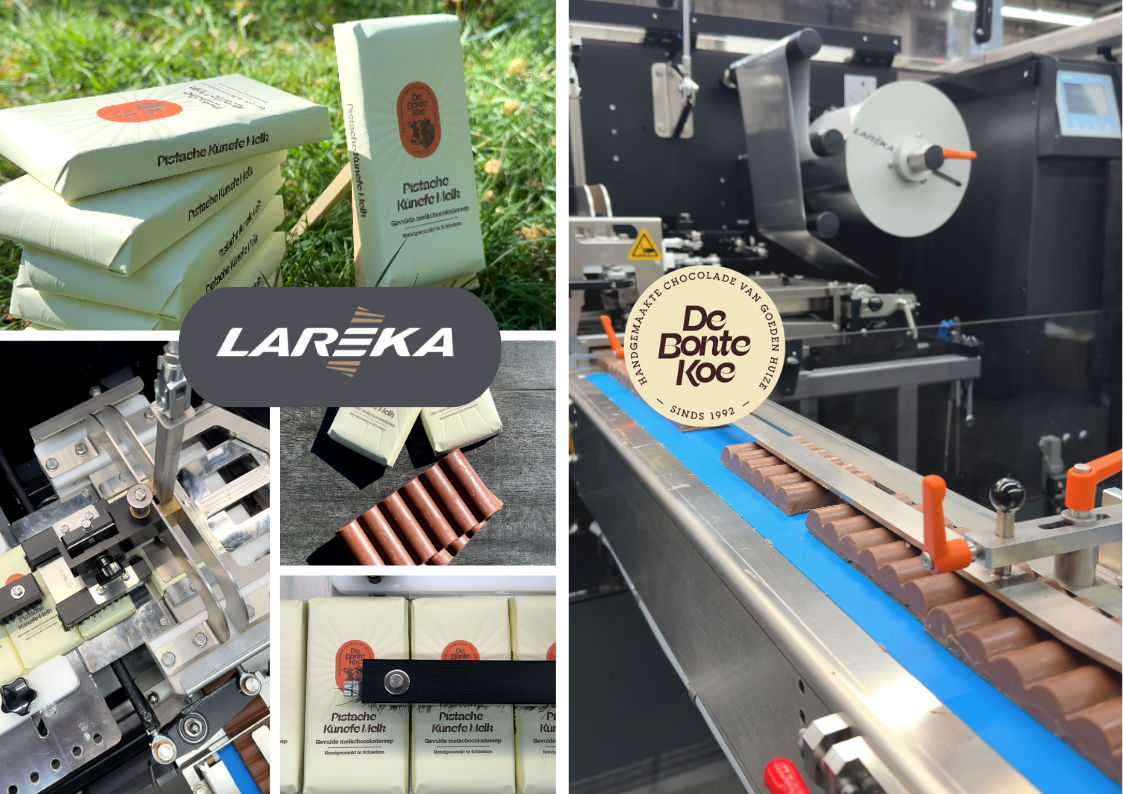
Wrapping chocolate is very important as chocolate is very sensitive to gas, moisture, odors, insects and other external factors. Additionally, the packaging is the first point of contact between the chocolatier and the consumers as it also serves as a marketing tool to strengthen one’s brand identity or transmit a message. Through creative and one-of-a-kind packaging, brands can show the quality of their products and of the company selling them and stand out from the competition when showcased on the shelf.
As the world is becoming more aware of the importance of sustainable packaging, companies try to stay up to date with trends and switch to eco-friendly materials. Consumers are now actively looking for products that are more sustainable and align with their values as they understand their choices might have a strong environmental impact. This has put quite some pressure on chocolate brands to start thinking about sustainable solutions for their packaging.
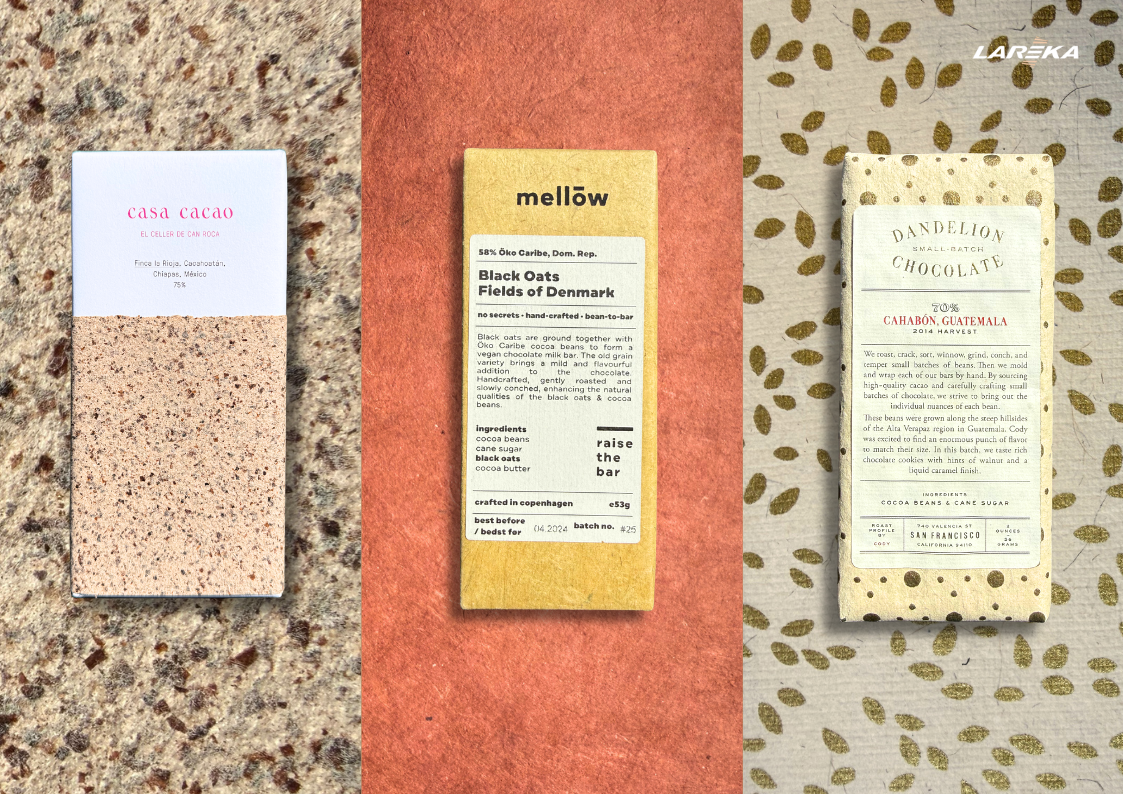
Some of our customers have done a great job coming up with innovative and eco-friendly solutions for packaging their chocolate bars. From Casa Cacao which uses artisanal cacao paper made with the leftovers of cacao shells as a third packaging layer to Dandelion which wraps their bars in paper made out of jeans and Mellow with their packaging crafted by hand from tree bark and adorned with natural coloring from spices. And these are only a few of the many sustainable materials available on the market from algae and bamboo to residue of leathering manufacturing process and more. All of these examples show that well-designed and thought packaging is a great way to showcase the authenticity, high quality and values’ commitment of a company.
But how can brands choose a sustainable packaging that also catches consumers’ attention on the shelf?
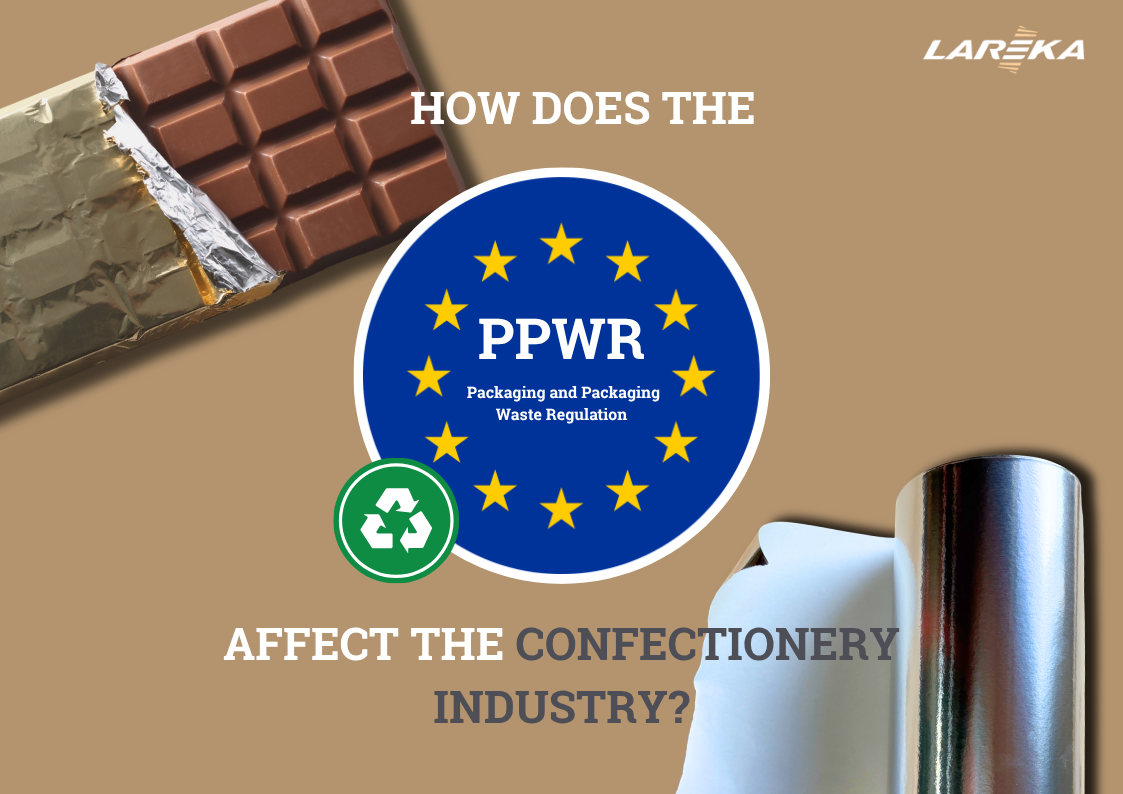
A one-size-fits-all approach is not possible as countries have different local regulations and recycling capabilities. Depending on the country, companies might need to add several pieces of information to their packaging such as the material or the way it should be recycled. For instance, the European Packaging and Packaging Waste Regulation (PPWR) requires that by 2027, all packaging must include clear information on how to reuse, recycle or dispose of the materials either on the label or with a QR code.
This does not only apply only to Europe as design for recyclability is quickly becoming a must in many other countries. The confectionary packaging market is shifting from flexible plastics towards mono-PE and mono-PP materials as all packaging should be recyclable or reusable. Thus, we recommend you to check well with your own country’s regulation before choosing the right materials for your product to ensure market access in 2026-2030.
At Lareka, we take the packaging process very seriously. That is why we help our customers find the right packaging materials tailored to their needs and desires. Additionally, we have a global network of suppliers that can provide many different materials.
If you have any questions, feel free to reach out and we will be happy to share our knowledge.
T: +31 402086666
E: info@lareka.nl
W: https://www.lareka.com/